Exploring Physical Vapor Phase Coating Technologies for High-Quality Optical Thin Films.
Physical vapor deposition (PVD) is an advanced process that transforms raw materials from solid to gaseous in a vacuum, depositing them onto a substrate's surface to create thin films. Regarding optical thin film coating, PVD offers three significant technologies: Evaporation Deposition, Plasma Sputtering Deposition, and Ion Beam Sputtering Deposition (IBSD), each with unique technical features.
Evaporation Deposition involves using heating or electron beams to vaporize raw materials in a vacuum chamber, forming a solid film on the substrate. This versatile and cost-effective method is widely used for various materials. Ion beam-assisted methods enhance film performance, improving compactness, adhesion, and surface hardness.
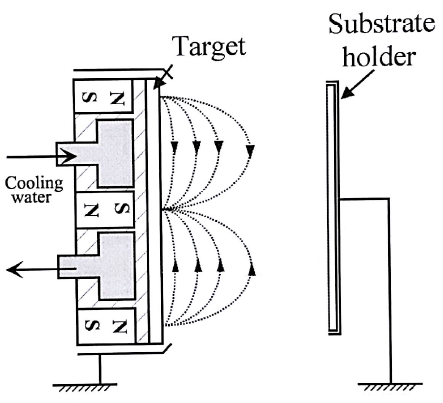
Plasma Sputtering generates glow plasma by applying a high voltage under an argon-containing vacuum. High-energy, positive ions in the plasma hit the cathode target, depositing target atoms onto the substrate at high speed. Plasma sputtering provides superior adhesion and density compared to evaporation technology. By increasing the magnetic field, the plasma dissociation and sputtering rates can be improved. The power supply options for plasma sputtering include direct current (DC), radio frequency (RF), and dual-cathode intermediate frequency (MF).
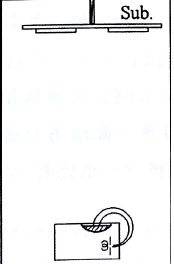
An emerging sputter method, Plasma Assisted Reactive Magnetron Sputtering (PARMS), offers high throughput, excellent process repeatability, and superior resistance to environmental corrosion. This method is ideal for mass-producing highly precise and reliable optical-filter coatings used in various optical sensors or devices applications in automotive, mobile, AR/VR/MR, and medical products.
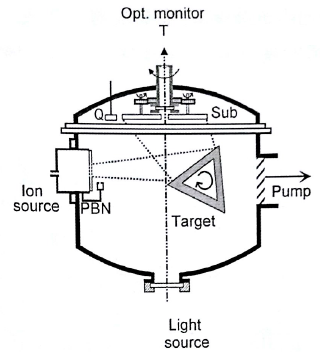
Ion Beam Sputtering (IBS) operates in a high vacuum, where an independent ion source emits an ion beam toward the target. High-energy ions knock out target atoms, which then deposit onto the substrate, offering precise thickness control and excellent compactness, although with a slower coating rate.